


Migration インクル子ども英会話浜松市
英語のブログ
インクル英会話のネイティブ先生のブログから英語を勉強しましょう。
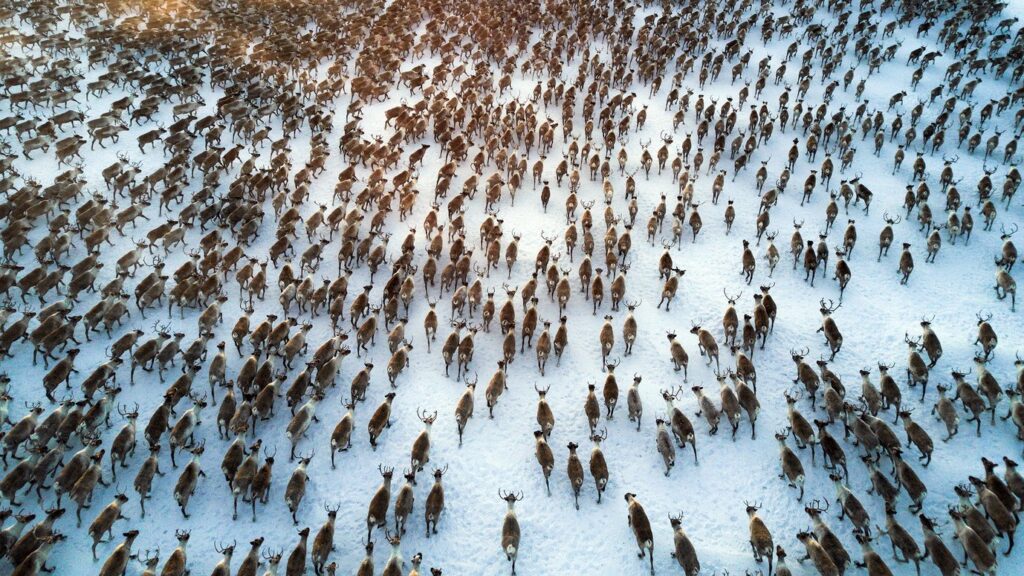
Did you know that many animals move their home twice a year? In the winter, when its cold and food is hard to find, they go South. Then, in the Spring when the weather warms up, they go back North. This process is called migration. Many animals travel a long way on their migration, and some even cross the earth in their journey. For example, the Caribou can travel up to 2,700 miles each year as it travels to new breeding grounds. Meanwhile, the Arctic Stern, a type of bird, can travel more than 25,000 miles on its migration. Not only land animals and birds, but sea animals also migrate. The humpback whale travels 4,970 miles on its journey to find warmer waters.
Migration is a mysterious process and is still not fully understood by scientists. There are many explanations for how animals find their way to their new destination. Some birds, for example, use the sun as a compass in order to find their direction, while others navigate by the stars. Still some can rely on magnetic fields. Other animals, including many land animals, follow visual markers in the landscape, such as mountains and rivers. The wildebeest in Africa follow the rainfall to find their way. Migration has many challenges as well, as the animals face exhaustion, dangerous weather, predators, and starvation. Despite all the challenges, however, animals continue to make these incredible journeys.
Useful Vocabulary:
Breeding grounds – where animals raise their children
Destination – a place you are going to
Compass – a tool used to find direction (north, south, east, west)
Navigate – to find the way to a place
Magnetic Field – an invisible force around the Earth that some animals use to find direction
Exhaustion – extreme tiredness
Predator – an animal that hunts and eats other animals
Starvation – suffering or death caused by not having enough food
多くの動物が、毎年2回「引っ越し」をすることを知っていますか?冬になると、寒くなり食べ物を見つけるのが難しくなるため、南へ移動します。そして春になり暖かくなると、再び北へ戻ります。この移動のことを「migration(移住・渡り)」と言います。多くの動物は移動の際にとても長い距離を旅し、中には地球を横断するものもいます。例えば、カリブーは新しい繁殖地へ向かうために、毎年最大2,700マイルも移動します。一方で、ホッキョクアジサシという鳥は、渡りの間に25,000マイル以上も飛ぶことがあります。陸の動物や鳥だけでなく、海の動物も移動します。ザトウクジラは、暖かい海を求めて4,970マイルも旅をします。
動物の移動はとても不思議な現象であり、科学者たちにもまだ完全には解明されていません。動物がどのようにして目的地への道を見つけるのかについては、さまざまな説明があります。例えば、ある鳥は太陽をコンパスのように使って方向を見つけ、別の鳥は星を頼りに移動します。また、磁場を利用する動物もいます。さらに、多くの陸上動物は、山や川などの景色を目印にして進みます。アフリカのヌーは、雨を追いかけながら道を見つけます。
移動には多くの困難もあります。動物たちは、疲労、危険な天候、捕食者、そして飢えに直面します。それでもなお、動物たちはこの驚くべき旅を続けているのです。
便利な単語
Breeding grounds(繁殖地) – 動物が子どもを育てる場所
Destination(目的地) – 行き先、目的地
Compass(コンパス/方位磁石) – 方角を調べるための道具
Navigate(進路を見つける・導航する) – 道を見つけて進む、目的地へ向かう
Magnetic Field(磁場) – 地球のまわりにある見えない磁気の力
Exhaustion(疲労困憊) – とても強い疲れ
Predator(捕食動物) – 他の動物を捕まえて食べる動物
Starvation(飢え/飢餓) – 食べ物がなくて苦しむこと
 テレビCM
テレビCM インクルブログ
 カレンダー
カレンダー 英検結果
英検結果


 無料体験・お問合せ
 053-434-4821